Tulsa's tree-lined streets are one of the best things about living here — until those same roots find their way into your sewer line. Midtown bungalows from the 1940s, older neighborhoods in North and East Tulsa, and established streets in Broken Arrow and Sand Springs share a common weak point: aging clay or cast-iron sewer pipe sitting directly under mature oaks, elms, and sweetgums. It's one of the most common calls we get, and if it's not caught early, it turns into a backup that damages your home.
Here's how to spot it, what it actually costs to fix, and how we handle it.
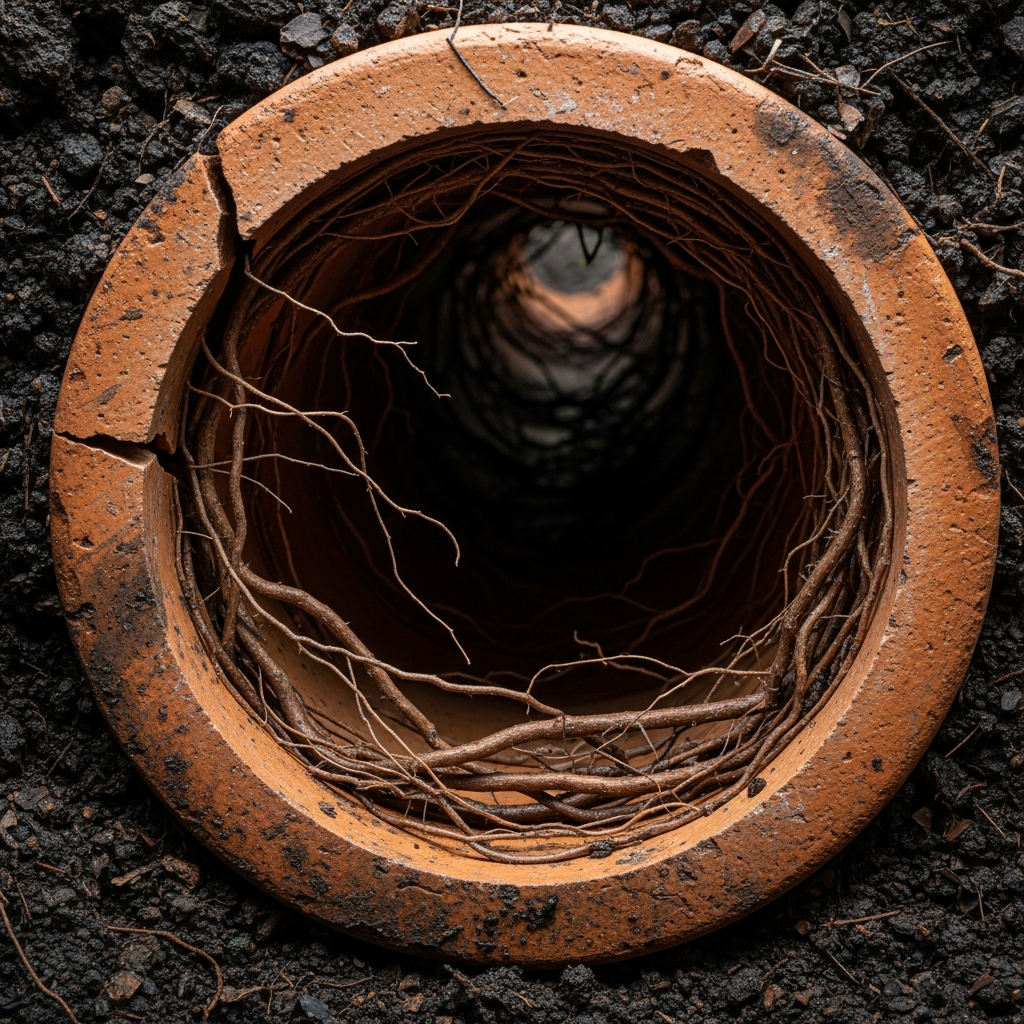
Tree Roots Backing Up Your Sewer Line?
Get a camera-verified diagnosis and flat-rate quote from a real Tulsa plumber — no guesswork, no hidden fees.
📞 Get My Free Inspection — (918) 992-4725Why Tulsa Sewer Lines Are a Magnet for Tree Roots
Roots don't punch through healthy pipe. They follow moisture. A hairline crack, a loose joint, or a corroded seam in an old clay or cast-iron line releases just enough vapor into the soil to draw roots straight to it. Once a root finds that opening, it grows inside the pipe, where it has constant access to water and nutrients — and it doesn't stop.
Tulsa's clay soil compounds the problem. As clay expands and contracts with our wet springs and dry summers, it shifts pipe joints just enough to create new openings year after year. Combine that with decades-old infrastructure in neighborhoods like Brookside, Maple Ridge, and parts of Owasso and Jenks, and you've got ideal conditions for root intrusion.
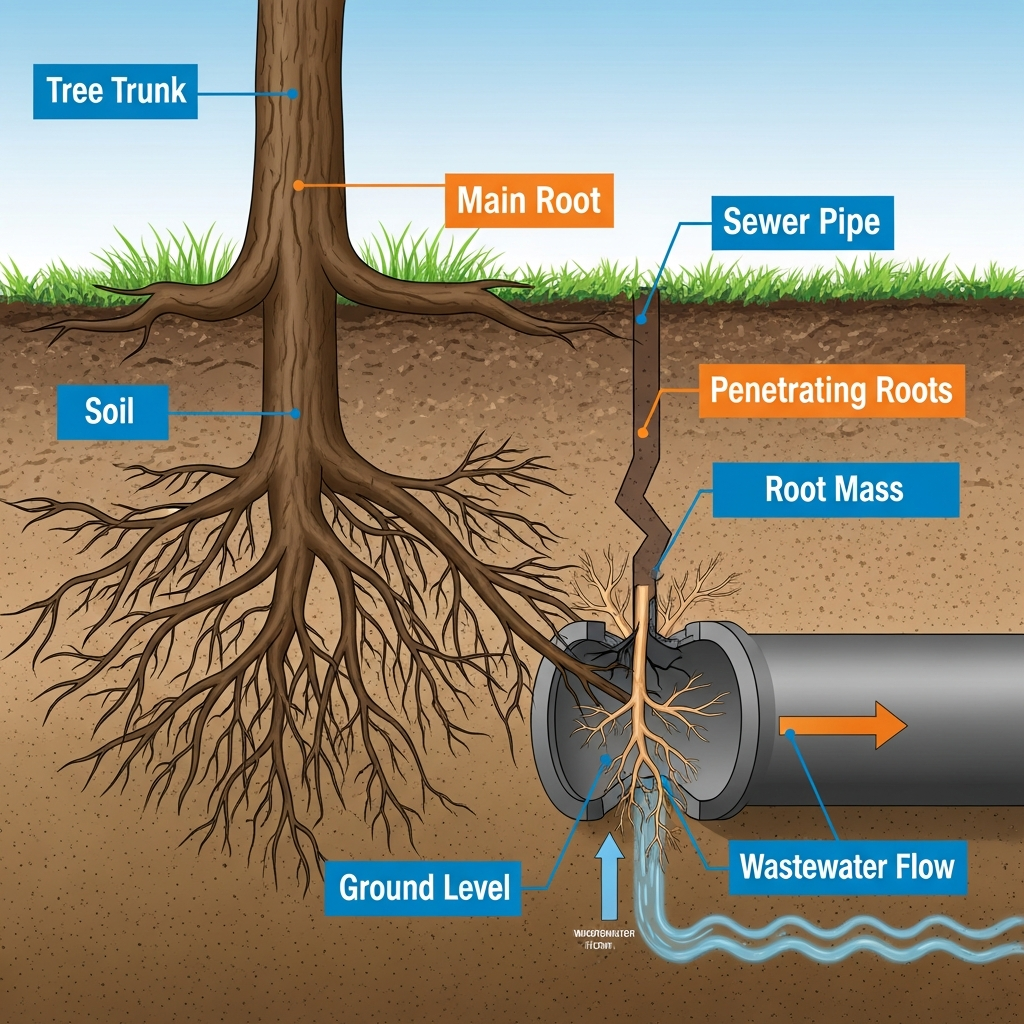
Warning Signs You Have Tree Roots in Your Sewer Line
Root intrusion rarely shows up overnight. It builds gradually, and most homeowners write off the early signs as a one-off clog.
Slow or Gurgling Drains
One slow sink is usually a local clog. When multiple drains — a toilet, a tub, a kitchen sink — all slow down around the same time, the blockage is likely in your main line, and roots are the most common cause.
Recurring Clogs
If you're plunging or snaking the same drain every few months, you're treating a symptom. A root mass left in the pipe keeps growing back after a basic clearing.
Sewage Backups and Foul Odors
Backup into a tub, shower, or floor drain — especially the lowest drain in the house — means the blockage has gotten serious. Sewer gas escaping through a cracked pipe will also produce a persistent smell in your yard or basement.
Lush, Soggy, or Sunken Patches in Your Yard
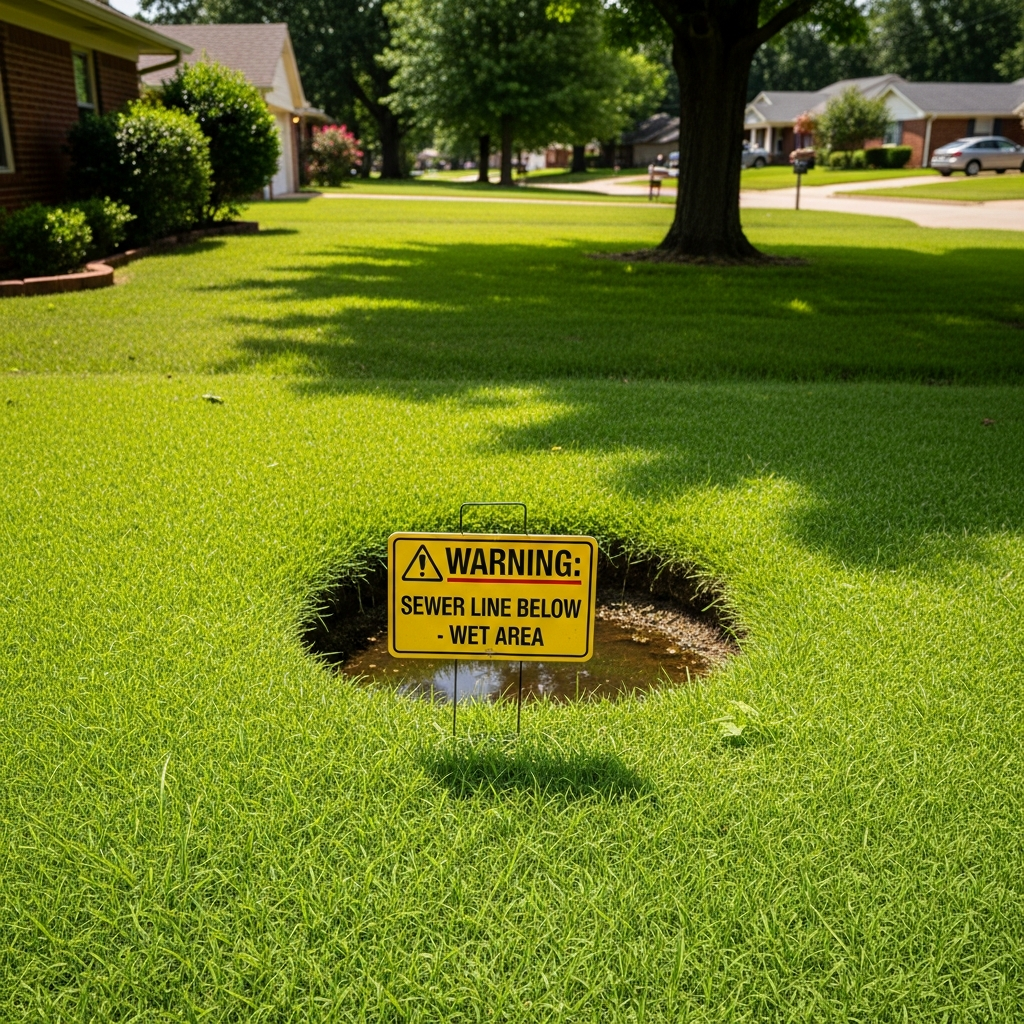
A noticeably greener patch of grass, a soft spot that never quite dries out, or a small dip forming along your sewer line's path usually means wastewater is leaking out underground — and roots have likely caused the crack.
How Much Does It Cost to Fix Tree Roots in a Sewer Line?
Pricing depends on how severe the intrusion is and the condition of the pipe itself:
| Method | Typical Range |
|---|---|
| Mechanical root cutting or snaking | $150–$500 |
| Hydro jetting | $350–$900 |
| Trenchless pipe lining (cracked/weak pipe) | $4,000–$15,000 |
| Full excavation & replacement (collapsed sections) | $50–$250/linear ft |
We won't know your exact number until we've actually looked at the pipe — which is why every job starts with a camera inspection, not a guess. We quote flat-rate, upfront pricing before any work begins, so there are no surprises on the invoice.
How We Remove Tree Roots From Your Sewer Line
Camera Inspection First — Always
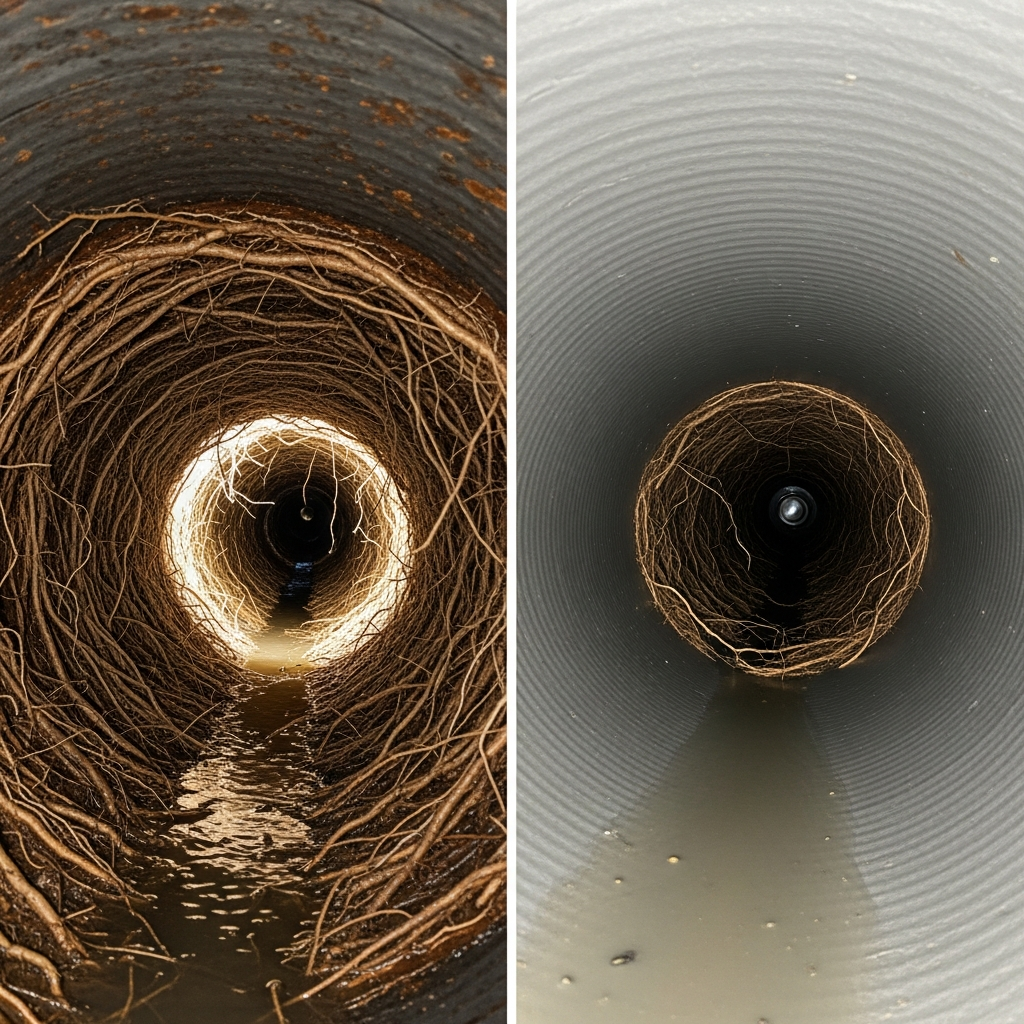
We run a high-definition sewer camera through the line before recommending anything. You'll see exactly where the roots are, how bad the intrusion is, and the condition of the pipe around it — on video, not just our word.
Hydro Jetting
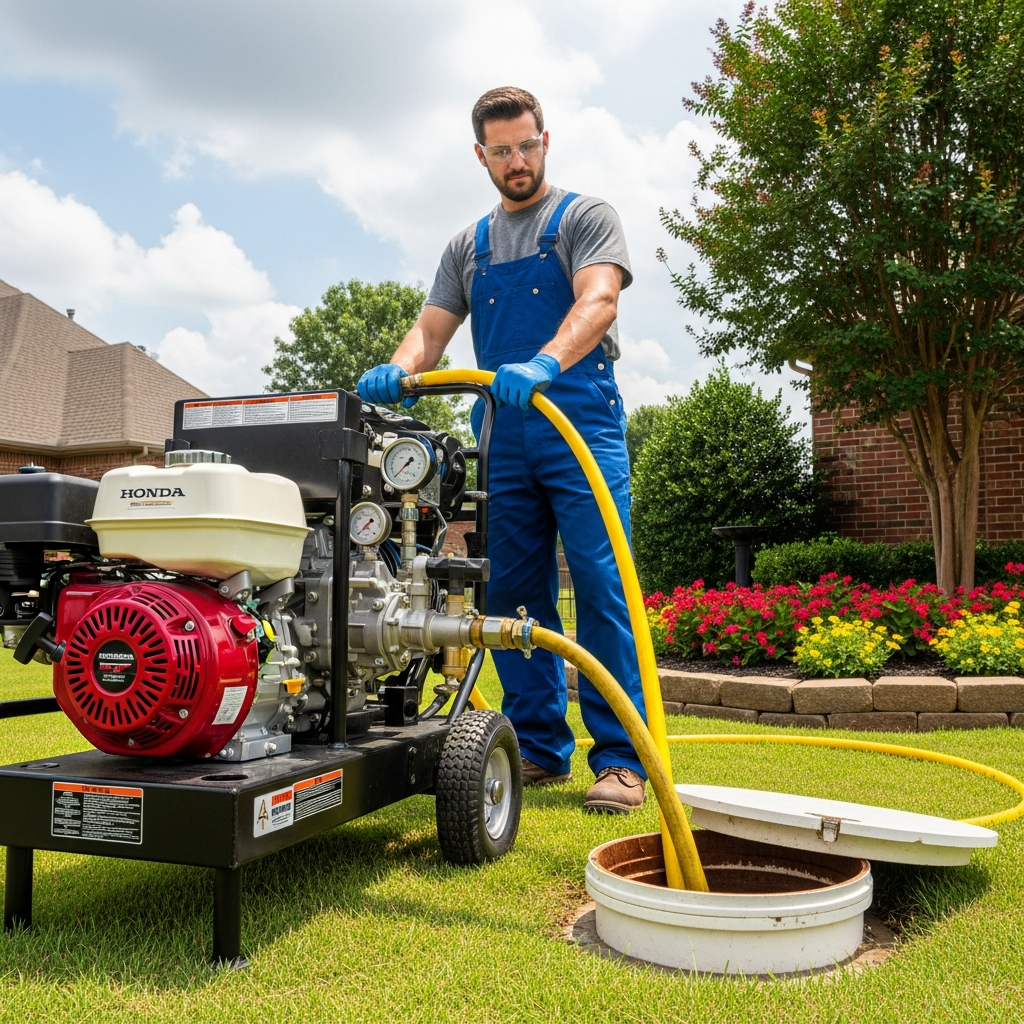
Hydro jetting uses high-pressure water to scour the full diameter of the pipe, clearing root mass, grease, and debris in one pass. It's our go-to for moderate-to-heavy intrusion because it cleans the whole pipe wall, not just a channel through the clog.
Mechanical Root Cutting
For root masses that need to be physically cut before jetting or pulled out directly, we use a motorized cutting head on a flexible cable. Fast and effective for getting flow restored immediately.
Trenchless Pipe Lining (For Damaged Pipe)
If roots have cracked or weakened the pipe itself, clearing the roots alone won't stop them from coming back. A trenchless liner creates a new, jointless interior surface that roots can't penetrate — without digging up your yard. If root intrusion has cracked a pipe that runs near or beneath your home's concrete foundation, that situation may also qualify as a slab leak repair — we assess both during the same camera inspection.
Why DIY Root Killers Rarely Solve the Problem
Store-bought foaming root killers and copper sulfate crystals can slow regrowth, but they don't remove the root mass already blocking your pipe, and they do nothing for a cracked or structurally compromised line. Worse, copper sulfate is restricted or banned in some municipalities and can damage septic systems. If you're dealing with a sewer line — not a surface drain — a chemical alone is a delay, not a fix.
Does Homeowners Insurance Cover Tree Root Damage?
Usually not. Most standard homeowner policies treat root intrusion as a maintenance issue rather than sudden, accidental damage, so it's excluded. Some insurers offer an optional sewer line endorsement that covers part of the repair — it's worth checking your policy and asking your agent directly before assuming you're covered.
How to Keep Roots From Coming Back
- Schedule a camera inspection every 1–2 years if you have mature trees near your line, especially in older Tulsa neighborhoods with clay pipe
- Keep aggressive root species away from your sewer line — willows, silver maples, cottonwoods, and elms are common offenders in Tulsa yards
- Know where your line runs before planting anything new; call 811 before you dig
- Consider trenchless lining proactively if your pipe is original to a pre-1970s home, even before you see symptoms
Why Tulsa Homeowners Choose Tulsa Sewer & Drain
We're not a national call center routing your problem to a subcontractor. You'll talk to a real, licensed Oklahoma plumber, and our team can typically be at your door within 60 minutes anywhere in the Tulsa metro — including nights and weekends. Every root removal job includes camera-verified video of the problem and the fix, flat-rate pricing before we start, and a written workmanship warranty. We're rated 4.9 stars by hundreds of Tulsa homeowners who've been exactly where you are now.
- 60-minute arrival goal — 24/7, including nights, weekends, and holidays
- Camera-verified before and after — you see exactly what changed
- Flat-rate, upfront pricing — no surprises on your invoice
- Written workmanship warranty on every job
- For full sewer line repair if roots have caused structural damage, we handle that too
Sewage backing up right now? Call us — we're at your door in 60 minutes, day or night.