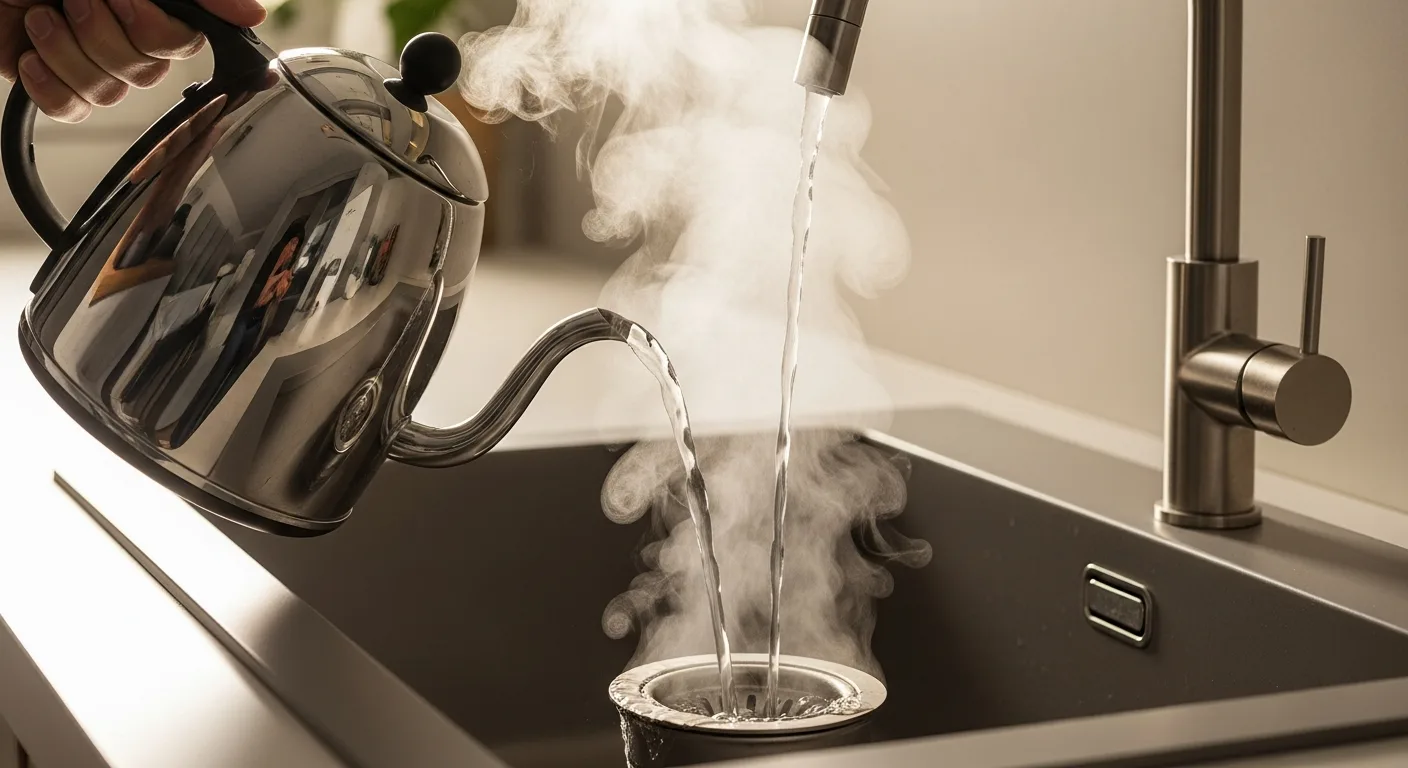
You’ve probably heard it at least once: slow drain? Grab a kettle. Pour boiling water down the sink and you’re good to go.
It sounds reasonable — cheap, chemical-free, and oddly satisfying. But here in Tulsa, we get calls after this fix goes sideways more often than you’d think. Usually it’s because the homeowner didn’t know what kind of pipes were under their sink.
The honest answer: it depends on your pipe material. Boiling water works fine in some situations and causes real damage in others. Here’s what you need to know before you try it. (If your problem is a shower not draining, the same pipe material rules apply — check that guide for shower-specific DIY steps.)
Your Pipe Material Makes All the Difference
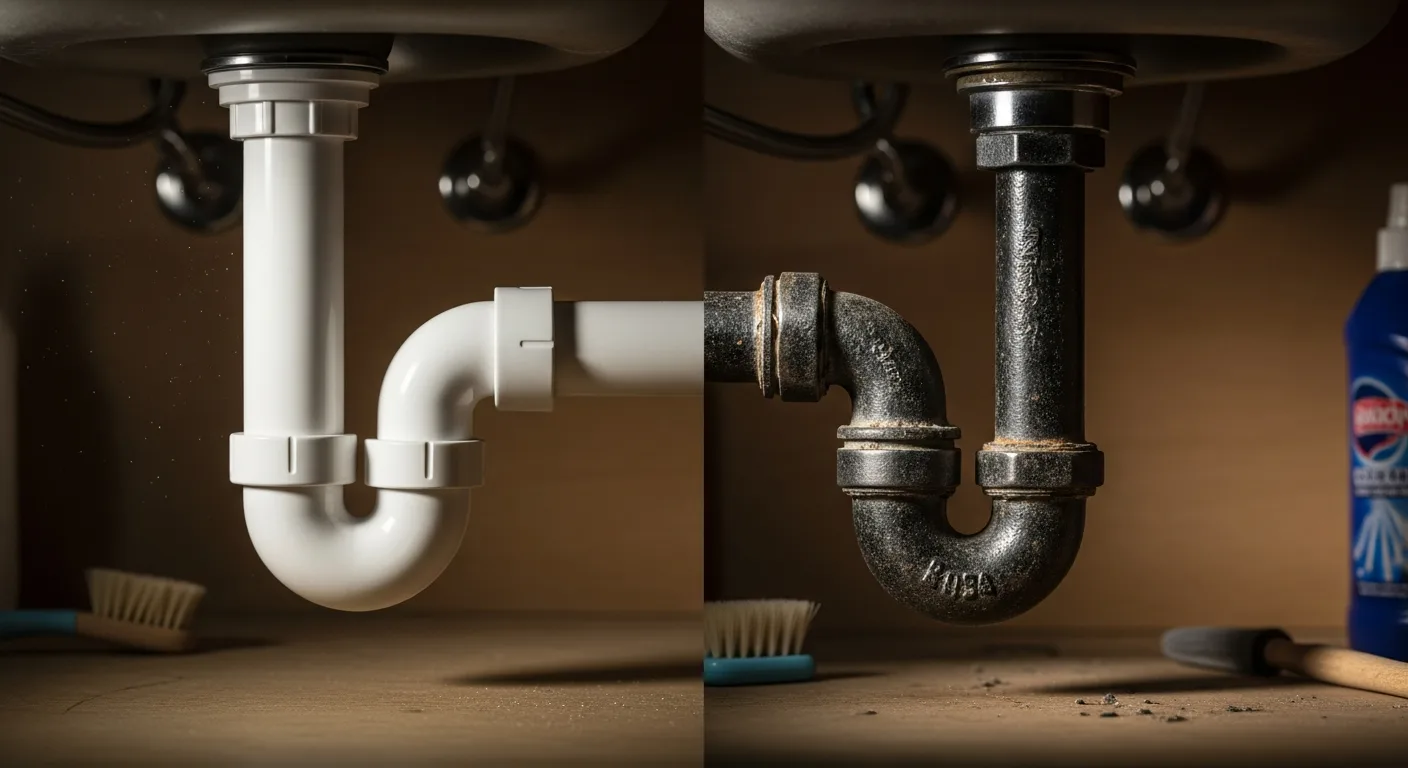
The key variable isn’t how stubborn the clog is — it’s what your pipes are made of.
Metal Pipes (Copper, Cast Iron, Galvanized Steel): Generally Safe
Copper, cast iron, and galvanized steel handle heat well. Occasional boiling water exposure won’t damage these materials, and a slow, steady pour can help dissolve fresh grease and soap scum inside metal drain lines.
If your home was built before 1970 — or if you’re in an older part of Midtown Tulsa, near the University of Tulsa campus, or in a historic North Tulsa neighborhood — there’s a solid chance your drain lines are still original cast iron or galvanized steel. Those pipes can take the heat.
PVC Pipes: Real Risk
PVC starts to soften at around 140°F. Boiling water is 212°F — well past that threshold.
One pour probably won’t destroy your pipes. But repeated exposure weakens the glued joints over time, causes them to loosen, and creates slow-developing leaks that are hard to spot until there’s real damage. Most homes built after 1980 in Tulsa — and virtually all newer construction in Broken Arrow, Owasso, Bixby, and South Tulsa — have PVC drain lines under the sink.
PEX and CPVC: Not Rated for It Either
PEX is more flexible than PVC and slightly more heat-resistant, but its safe service temperature tops out around 200°F. Boiling water at 212°F still exceeds that, and the crimped or barbed connections are especially vulnerable to heat stress over time.
CPVC is designed to carry hot water in supply lines and can handle up to 200°F — but it’s not rated for regular boiling water exposure in drain applications, and repeated heat cycling shortens its service life.
Bottom line: if your home has plastic pipes — which most Tulsa homes built after 1980 do — boiling water is a risk not worth taking.
Not Sure What Pipes You Have?
Our licensed Tulsa plumbers can identify your pipe material and give you a straight answer — in one call. No guesswork, no surprises.
📞 Call Now: (918) 992-4725We answer 24/7 — real licensed plumbers, no call centers.
When Boiling Water Actually Works (And When It Doesn’t)
Even in metal-pipe homes, boiling water only solves specific types of clogs. It can melt fresh grease and dissolve soap scum — the kind of slick film that builds up slowly in kitchen drain lines.
Here’s where it falls short:
- Water already backing up? Boiling water can’t reach the clog — it just pools above the blockage and stresses the pipe joints above it.
- Hair, food debris, or tree roots? Boiling water does nothing for any of these.
- Recurring slow drain? If the problem keeps coming back, you’re past the boiling water stage — you need a sewer camera inspection to find out what’s actually going on.
One technique that actually helps: if you’re using boiling water on metal drain lines with a fresh grease clog, run cold water from the tap at the same time. The cold water cools things slightly before the hot water reaches any plastic components — like the P-trap under your sink — and helps flush the dissolved grease further down the line.
What About Boiling Water to Kill Drain Flies?
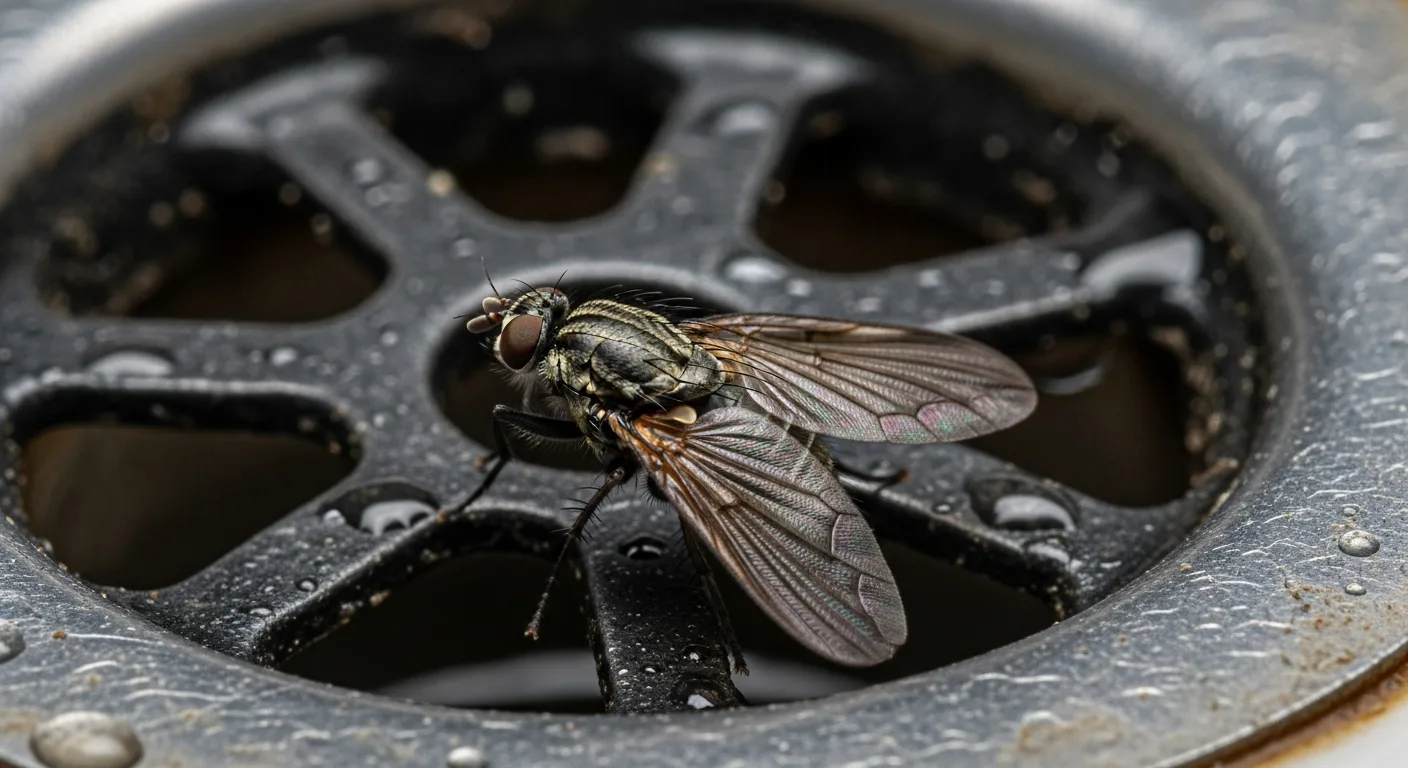
This question comes up a lot in Tulsa summers, when drain flies start appearing around bathroom sinks and kitchen drains.
The logic is valid — drain flies live in the organic biofilm that coats the inside of drain pipes, and very hot water can disrupt that environment. For this specific use, the technique is a little different from clearing a clog:
- Let the kettle cool 2–3 minutes after boiling (you want very hot water, not a full 212°F)
- Pour slowly and directly into the drain opening
- Scrub the drain opening with a small brush after each pour
- Repeat every couple of days for about a week
For persistent drain fly problems, the real fix is removing the biofilm entirely — which means a professional drain cleaning or an enzyme-based drain cleaner used consistently. Hot water alone usually doesn’t reach deep enough to eliminate the colony.
What Is the “135 Rule” in Plumbing?
You may have seen this come up in searches. The 135 rule is a general guideline in residential plumbing: drain lines shouldn’t be exposed to water temperatures consistently above 135°F. Above that threshold, PVC joints can soften, rubber seals degrade faster, and glued fittings can begin to loosen over time.
Your water heater is typically set between 120°F and 140°F. By the time that hot water travels from the heater to your drain, it’s usually cooled to around 110–130°F — right in the safe range for most pipe materials.
Practical takeaway: your hottest tap water is a much safer choice for drain maintenance than boiling water. It’s hot enough to cut through light grease and soap scum without putting your plastic pipe joints at risk.
Safer Alternatives That Actually Work
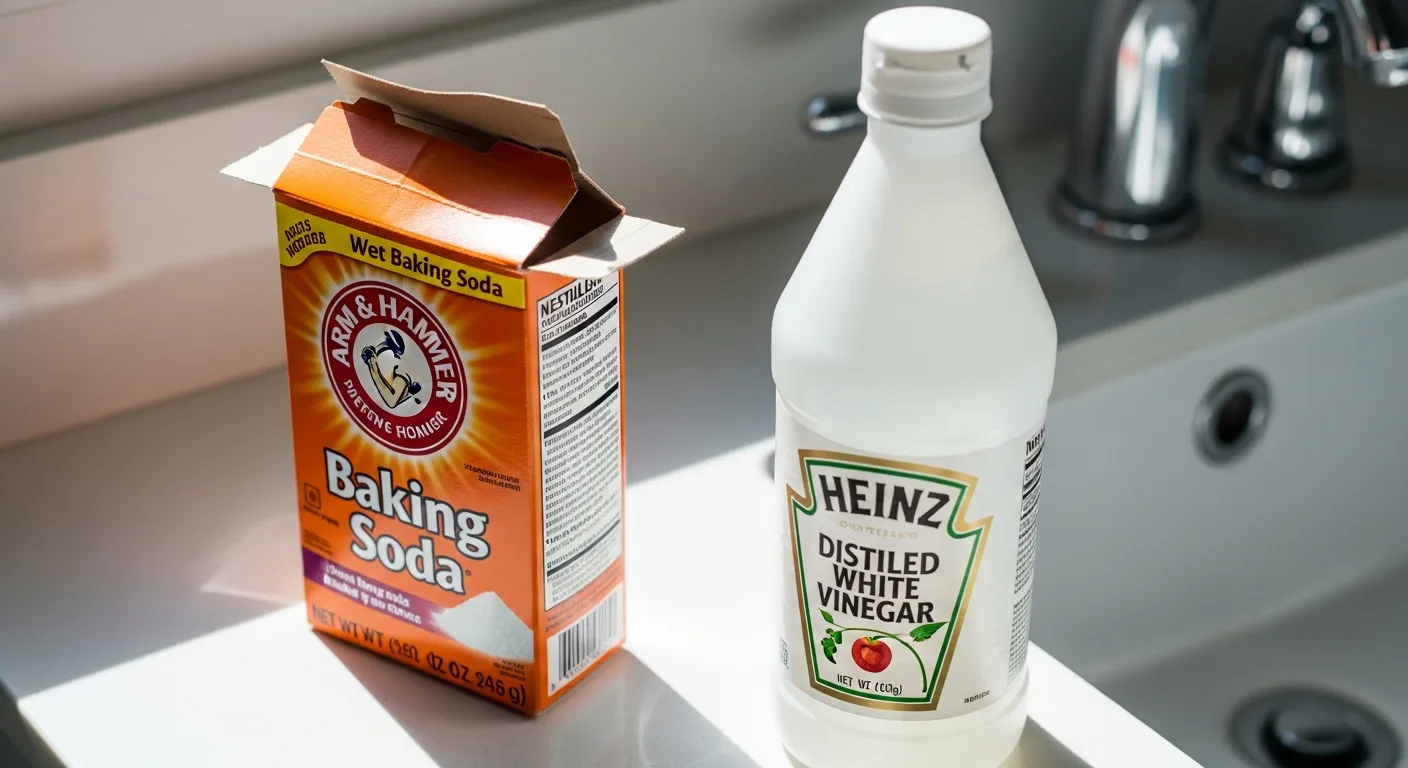
If your drain is slow, here’s what we recommend — in order of what to try first:
- Hot (not boiling) tap water — Run the hottest water your faucet produces for 3–5 minutes. Safe for all pipe types, effective on light buildup, and zero risk to your plumbing.
- Baking soda and white vinegar — Pour ½ cup of baking soda, followed by ½ cup of vinegar. Cover the drain for 15 minutes, then flush with hot tap water. Safe for all pipes, helps with odor, but won’t move a serious clog.
- A sink plunger — For most surface-level clogs in bathroom and kitchen sinks, a flat-cup plunger does the job quickly. Block the overflow hole with a wet rag first to maximize suction.
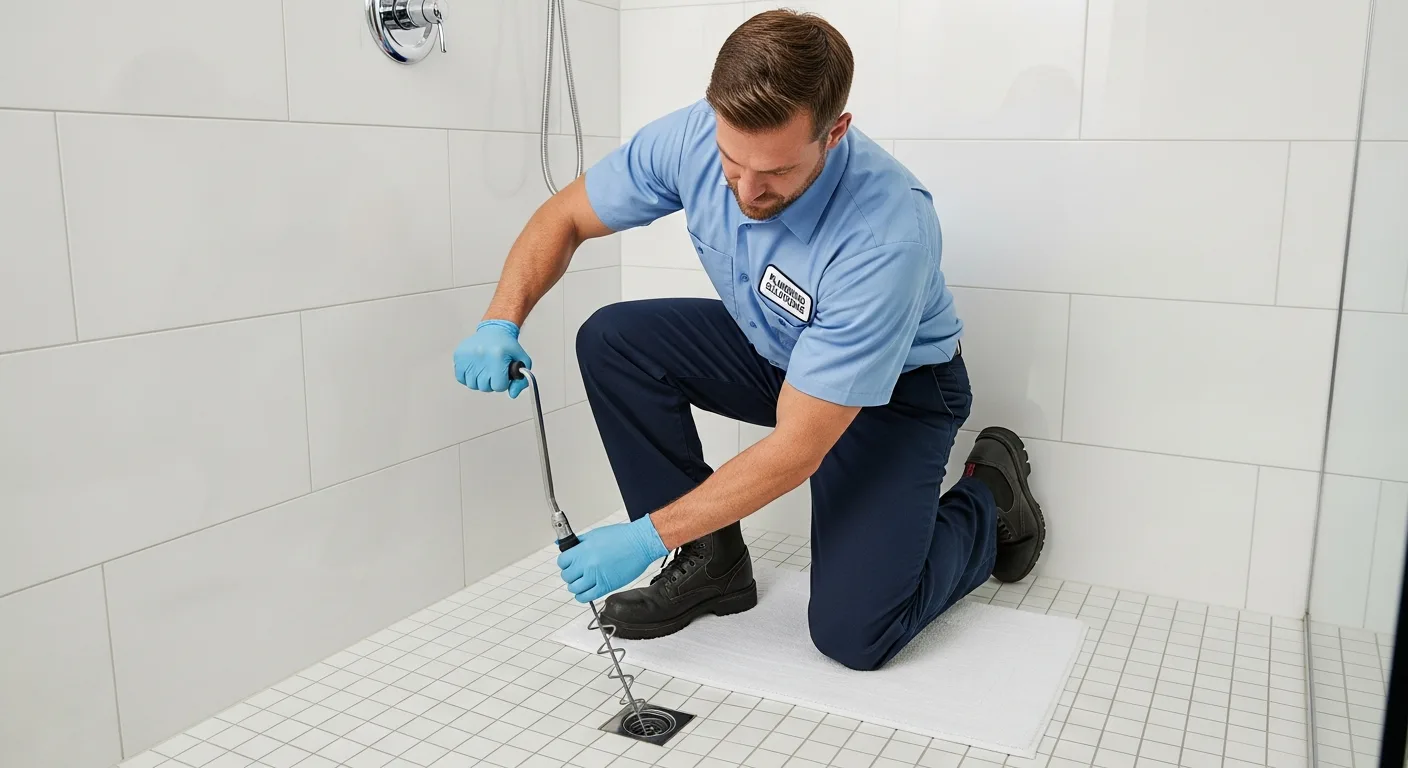
- A drain snake — A 25-foot manual snake reaches most clogs that a plunger can’t. Feed it in slowly, rotating as you go, and pull out whatever’s causing the blockage.
- Professional hydro jetting — For stubborn or recurring clogs, our team uses high-pressure water jetting that clears the full pipe diameter in one visit — root intrusions, grease buildup, and mineral scale from Tulsa’s hard water, all gone in a single pass.
Your Drain Slow? Let’s Fix It Right.
Skip the DIY risks. Our team provides professional drain cleaning with camera-verified results and a written warranty on every job. Backed-up drain at 2 a.m.? We answer the phone. 60-minute arrival guarantee in the Tulsa metro.
📞 Call (918) 992-4725 — Schedule Same-Day Service Book OnlineWhen to Stop DIYing and Call a Tulsa Plumber
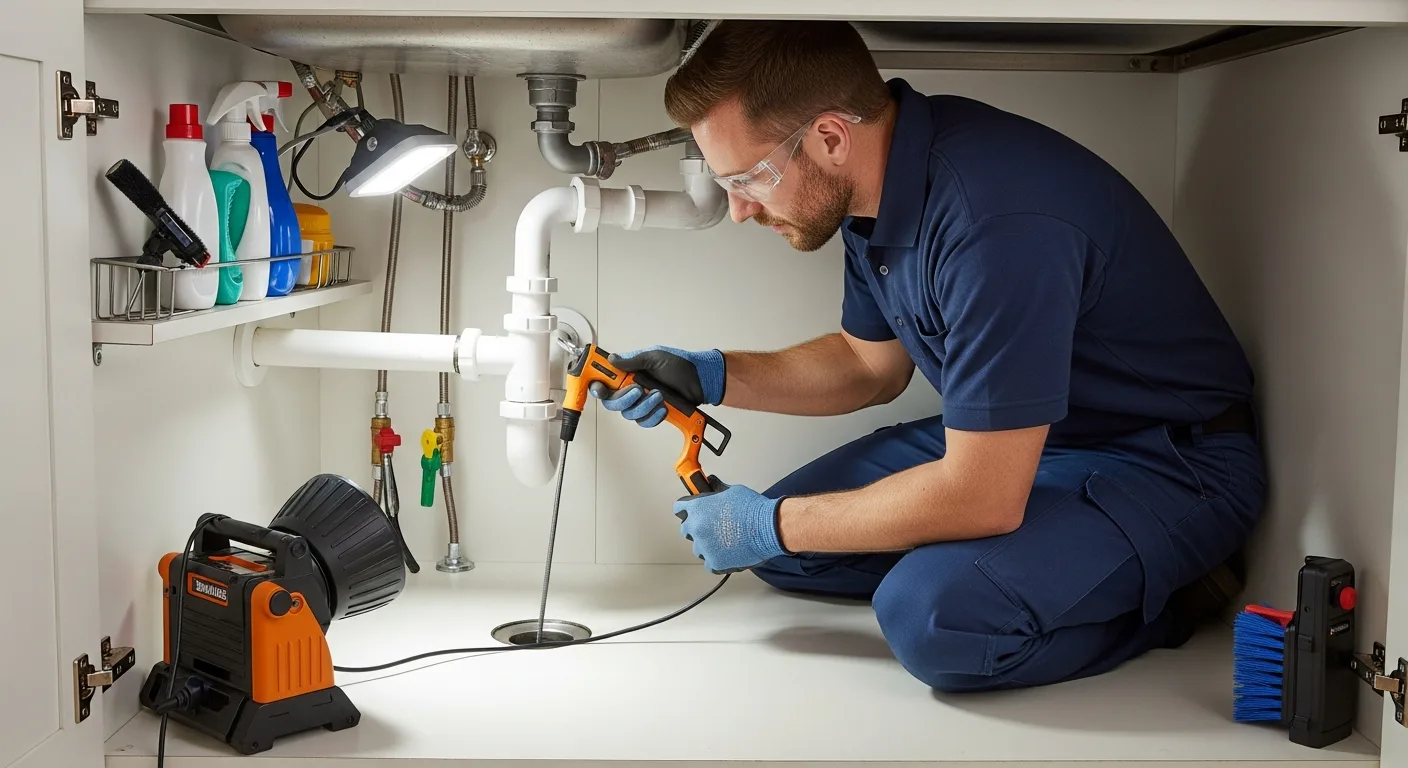
Some slow drains aren’t clogs at all. If your drain keeps backing up after you’ve cleared it, or if multiple drains in your home are slow at the same time, the problem is likely in your main sewer line — not the individual drain.
In Tulsa, this is especially common in neighborhoods with mature post-oaks and Bradford pear trees. Their root systems are aggressive, and they’ll find any crack or joint in your sewer line and work their way in. No DIY method — hot water, baking soda, or chemical drain cleaner — will fix a root intrusion. But a sewer camera inspection will find it in about 15 minutes, and catching it early can save thousands in emergency repair costs down the road.
If that sounds like your situation, give us a call. We’ll look at it, tell you exactly what’s there, and fix it right the first time. Also see our shower not draining guide if the slow drain problem is in your bathroom — showers have their own set of common causes worth knowing.
Frequently Asked Questions
Is it bad for boiling water to go down the drain?
It depends on your pipe material. Metal pipes — cast iron, copper, galvanized steel — can handle occasional boiling water exposure without major risk. PVC and PEX pipes, which are in most Tulsa homes built after 1980, are a different story. Boiling water softens the glued fittings over time, causes joints to loosen, and creates slow-developing leaks that are often hard to catch until there’s real damage.
How long do you wait to pour boiling water down the drain?
If you want to reduce risk to plastic pipe components, let the kettle sit for 2–3 minutes after reaching a full boil. This brings the temperature down to around 175–185°F — still hot enough to dissolve grease, but less likely to warp PVC fittings or loosen glued joints. Never pour straight from a boiling kettle into a PVC-plumbed sink.
What do plumbers say about baking soda and vinegar?
Most plumbers say it’s safe but limited — ourselves included. The fizzing reaction looks impressive but doesn’t generate enough mechanical force to clear a real clog. Where it actually works well: as a maintenance flush for a mildly slow drain, and for deodorizing. For an actual blockage, you’ll need a plunger, a snake, or a professional.
What is the fastest way to unclog a drain?
A plunger handles most surface-level clogs in under a minute with no chemicals or tools needed. For deeper clogs, a drain snake is faster and more reliable than any liquid solution. For recurring or fully blocked drains, professional hydro jetting clears the full pipe diameter in a single visit — and we verify the result with a camera so you can see it’s done right.
Can boiling water crack a porcelain sink?
Yes. Porcelain is vulnerable to thermal shock — a sudden jump in temperature can create hairline cracks that worsen over time and eventually lead to leaks around the sink base. If using very hot water near a porcelain sink, pour it directly into the drain opening rather than into the bowl, and avoid going from very cold water to extremely hot in rapid succession.
Can I pour boiling water down the drain to kill drain flies?
It can help, with some caveats. Let the kettle cool 2–3 minutes first — you want very hot water, not a full 212°F — then pour slowly and follow with a scrub brush around the drain opening. Repeat every few days for about a week. For persistent drain fly infestations, an enzyme-based drain cleaner or professional drain cleaning is more reliable, since hot water alone rarely reaches deep enough to remove the biofilm where the flies breed and lay eggs.
Will boiling water damage a garbage disposal?
Yes. Garbage disposals contain rubber seals, plastic components, and motor parts that aren’t rated for boiling water temperatures. Always run cool or cold water when using your disposal. If the clog is inside the disposal itself, use a hex key to manually rotate the grinding plate rather than hot water to loosen it.